Cash vs Mortgage: Which Is Better for Your Home Purchase
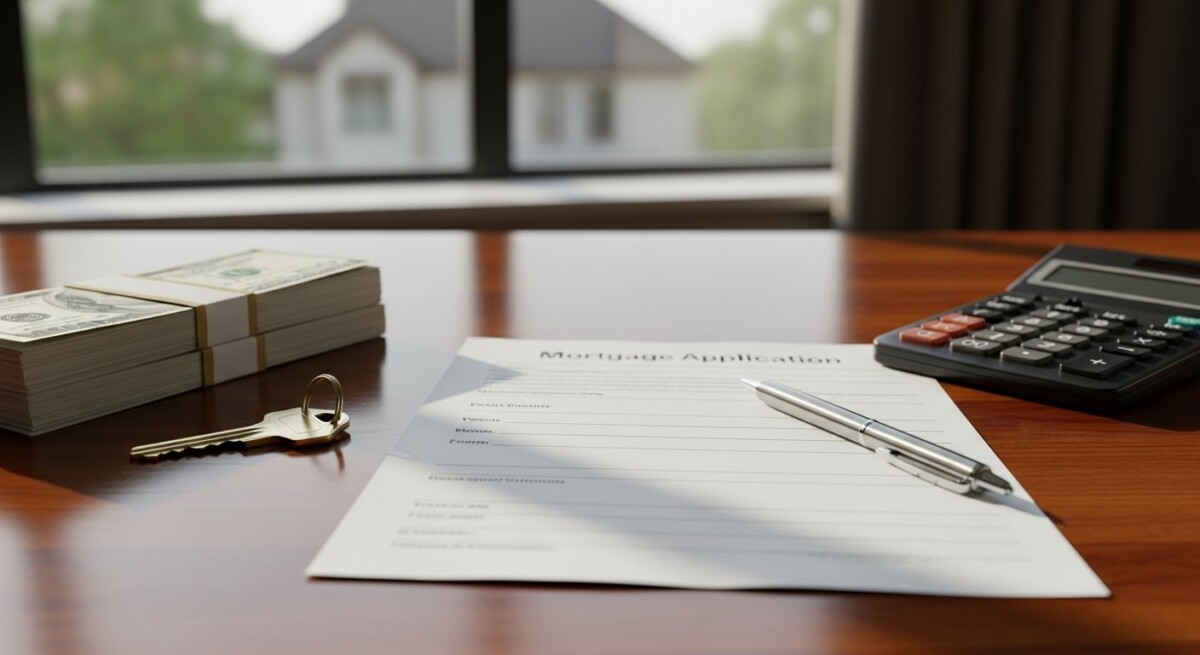

You have found the perfect house. The price is right, the neighborhood is ideal, and the inspection report is clean. Now comes the big question: should you pay cash or take out a mortgage? This decision is not just about how much money you have in the bank. It affects your monthly cash flow, your long-term investment returns, and even your ability to compete in a hot housing market. A thorough mortgage vs cash buying comparison reveals that neither option is universally better. What works for a retiree with a large nest egg may not make sense for a young professional with strong earning potential. In this guide, we break down the financial, emotional, and practical trade-offs so you can choose the path that fits your unique situation.
The Financial Trade-Off: Liquidity vs Interest
The most obvious difference between a cash purchase and a mortgage is the upfront capital required. Paying cash means writing a check for the full purchase price, which could be hundreds of thousands of dollars. That money is no longer available for emergencies, investments, or other opportunities. Taking out a mortgage, on the other hand, allows you to keep your cash reserves intact. You pay a down payment (typically 3 to 20 percent of the price) and finance the rest through monthly payments that include principal, interest, taxes, and insurance.
The trade-off is the cost of borrowing. A 30-year fixed-rate mortgage at, say, 7 percent interest will add a significant amount of total interest over the life of the loan. If you buy a $400,000 home with a 20 percent down payment, you would finance $320,000. Over 30 years at 7 percent, you would pay roughly $446,000 in interest alone. That is more than the price of the house. By paying cash, you eliminate all that interest and own the home free and clear from day one.
However, the decision is not as simple as comparing interest costs. The cash you use to buy the home could have been invested in the stock market, bonds, or a business. Historically, the S&P 500 has returned an average of about 10 percent per year. If you take that $320,000 and invest it instead of using it to buy a house, the potential growth over 30 years could far exceed the interest you would pay on the mortgage. This is the classic opportunity cost question. In our in-depth mortgage vs cash buying comparison, we explore the numbers for different income brackets and risk tolerances.
To help you visualize the trade-off, consider these three scenarios:
- Scenario A: Pay cash for a $400,000 home. You own the house outright but sacrifice potential investment returns on that capital.
- Scenario B: Put 20 percent down ($80,000) and finance the rest. You keep $240,000 invested, but you pay mortgage interest and have a monthly payment for 30 years.
- Scenario C: Put 5 percent down ($20,000) and finance the rest. You keep most of your cash invested but pay private mortgage insurance (PMI) and a higher monthly payment.
Each scenario has different implications for your net worth over time. The best choice depends on your expected investment returns, your risk tolerance, and the current mortgage rate environment. For many buyers, a middle ground works best: put down enough to avoid PMI (usually 20 percent) and invest the rest.
When Cash Beats a Mortgage Every Time
There are situations where paying cash is clearly the superior option. If you are retired or close to retirement, cash flow predictability becomes paramount. A mortgage payment is a fixed obligation that must be met every month, regardless of market conditions or unexpected expenses. By owning your home outright, you eliminate that recurring cost and reduce your monthly budget by a significant amount. This can free up money for healthcare, travel, or helping family members.
Another scenario where cash shines is a highly competitive market. Sellers often prefer cash offers because they eliminate the risk of financing falling through. A cash buyer can close in as little as two weeks, while a mortgage buyer typically needs 30 to 45 days. In multiple-offer situations, a cash offer with a quick close can be the tiebreaker, sometimes even at a slightly lower price. If you are looking in a hot market where homes sell in days, having cash ready gives you a distinct advantage.
Cash also eliminates the stress and paperwork of the mortgage application process. You skip the credit checks, income verification, appraisal, and underwriting delays. There are no origination fees, no discount points, and no lender requirements for homeowners insurance or escrow accounts. The transaction becomes simpler and faster, with fewer parties involved. For buyers who value simplicity and speed, cash is a clear winner.
But cash is not without risks. Tying up a large portion of your net worth in a single illiquid asset can be dangerous. If you need to sell quickly due to a job loss or medical emergency, you may have to accept a lower price. Real estate markets can decline, and you could lose equity. Diversification is a fundamental principle of investing, and putting all your capital into one house violates that principle. That is why many financial advisors recommend financing even if you have the cash, as long as the monthly payment fits comfortably within your budget.
When a Mortgage Is the Smarter Move
For most young to mid-career professionals, a mortgage is the smarter financial move. The reason is leverage. By using borrowed money to buy an asset that appreciates over time, you magnify your returns. Suppose you buy a $400,000 home with a 20 percent down payment ($80,000). If the home appreciates by 4 percent in one year, its value increases by $16,000. That $16,000 gain is a 20 percent return on your $80,000 investment. If you paid cash, the same $16,000 gain would be only a 4 percent return. Leverage amplifies appreciation.
Mortgages also allow you to preserve liquidity. An emergency fund of three to six months of expenses is essential. If you drain your savings to buy a house with cash, you leave yourself vulnerable to job loss, medical bills, or major home repairs. By financing, you keep cash in the bank and maintain a safety net. Additionally, mortgage interest and property taxes are often tax-deductible, which can lower your effective borrowing cost. While the standard deduction has reduced the number of taxpayers who itemize, many homeowners still benefit from these deductions, especially in high-cost states.
Another advantage of a mortgage is the ability to invest the money you would have spent on the house. If you have a high risk tolerance and a long time horizon, investing that cash in the stock market can generate returns that outpace mortgage interest. For example, if you have a 7 percent mortgage rate and the stock market returns 10 percent, you come out ahead by 3 percent annually. Over 30 years, that difference compounds significantly. Of course, there is no guarantee that the market will perform as it has in the past, but historically, equities have outperformed real estate appreciation.
Finally, a mortgage can be a hedge against inflation. Your monthly payment is fixed (if you choose a fixed-rate loan), while rents and other living costs tend to rise over time. As inflation erodes the purchasing power of money, your mortgage payment becomes cheaper in real terms. Twenty years from now, that $2,000 monthly payment will feel much smaller than it does today. That is a powerful long-term benefit.
The Hidden Costs You Might Overlook
When comparing cash vs mortgage, many buyers focus only on the big numbers: the purchase price and the interest rate. But there are hidden costs on both sides that can shift the equation. For cash buyers, the biggest hidden cost is the loss of liquidity. If you need to access cash later, you cannot easily sell a portion of your house. You would need to take out a home equity loan or sell the property, both of which come with costs and delays.
For mortgage buyers, the hidden costs include closing fees, lender origination charges, appraisal fees, title insurance, and recording costs. These typically amount to 2 to 5 percent of the loan amount. For a $320,000 loan, that could be $6,400 to $16,000 upfront. Additionally, if your down payment is less than 20 percent, you will pay private mortgage insurance (PMI) until you reach 20 percent equity. PMI can add $100 to $300 per month for a typical loan.
There is also the cost of maintaining the home. Whether you pay cash or finance, you will face property taxes, insurance, repairs, and maintenance. A common rule of thumb is to budget 1 percent of the home’s value per year for maintenance. That is $4,000 annually for a $400,000 home. These costs are independent of your financing method but must be factored into the overall decision. To estimate your total monthly housing cost with a mortgage, use our mortgage calculator to input your price, down payment, and interest rate. It will show you the principal and interest, plus taxes and insurance if you include them.
How Your Credit Profile Affects the Decision
Your credit score and financial history play a major role in the mortgage vs cash decision. If your credit score is below 620, you may have difficulty qualifying for a conventional loan. You could still get an FHA loan with a score as low as 580 (with a 3.5 percent down payment), but the interest rate will be higher. In that case, paying cash might be the only viable option unless you can improve your credit first.
On the other hand, if you have excellent credit (760 or above), you will qualify for the best mortgage rates. That can make financing very attractive. Even with high rates in 2026, a strong credit score can shave a full percentage point off your rate, saving thousands over the life of the loan. For example, a borrower with a 760 score might get a 6.5 percent rate while someone with a 640 score pays 8 percent. On a $320,000 loan, that difference equals roughly $320 per month in payment.
Another factor is your debt-to-income (DTI) ratio. Lenders typically require a DTI of 43 percent or lower (including the new mortgage payment). If you have existing student loans, car payments, or credit card debt, adding a mortgage could push you over the limit. In that case, paying cash avoids the qualification issue entirely. However, if your DTI is low and you have stable income, a mortgage gives you the opportunity to build equity while keeping your other debts manageable.
If you are self-employed or have irregular income, mortgage approval can be more challenging. You need two years of tax returns and often a higher down payment. Cash buyers face none of these hurdles. They do not need to prove income or document assets; they just need to prove they have the funds. For entrepreneurs and freelancers, cash can be the simpler path.
Before making a final choice, it is wise to check your credit report and prequalify with a lender. That will give you a clear picture of the rates and terms you can expect. You can also explore our frequently asked questions for more details on credit requirements and loan programs.
Making the Final Decision: A Step-by-Step Framework
To decide between cash and a mortgage, follow this five-step framework. First, calculate your total liquid net worth and how much of it you would need to use for a cash purchase. If the home price exceeds 50 percent of your liquid net worth, think twice about paying cash. You need to keep a safety net. Second, project your monthly expenses in retirement or in five years. If a mortgage payment would cause stress, cash may be better for peace of mind.
Third, compare the expected return on your alternative investments against the mortgage interest rate. If you believe you can earn a higher return in the market than the mortgage rate, take the loan. Fourth, consider your timeline. If you plan to stay in the home for less than five years, a mortgage might not make sense because closing costs and transaction fees eat into any gains. For a short stay, cash or a short-term adjustable-rate mortgage could be better. Fifth, evaluate your emotional comfort with debt. Some people sleep better with no mortgage, even if it costs them potential investment gains. That is a valid factor. Financial decisions are not purely mathematical; they involve psychology and personal values.
If you are still unsure, run both scenarios through a detailed spreadsheet. Assume a conservative investment return (say 5 to 6 percent) and a conservative home appreciation rate (3 to 4 percent). Then compare your net worth after 10, 20, and 30 years. You may find that the numbers are closer than you expect. Often the decision comes down to your tolerance for risk and your need for liquidity.
No matter which path you choose, the goal is the same: to own a home that supports your financial and personal well-being. A mortgage gives you leverage and liquidity. Cash gives you simplicity and freedom from interest payments. Understanding the trade-offs is the first step to making a confident choice. For a deeper dive into the numbers, revisit our full mortgage vs cash buying comparison that includes real-world examples and rate scenarios.
Ultimately, there is no one-size-fits-all answer. The best decision aligns with your financial goals, your stage of life, and your personal comfort. Take the time to analyze your situation thoroughly. Use the tools and resources available on MortgageZone to run your numbers and explore loan options. With the right information, you can make a purchase that serves you well for years to come.


About Landon Hayes
Recent Posts



Find The Best Rates