
Choosing a Home Inspector: 7 Tips Before You Hire
Use these choosing a home inspector tips to verify credentials, read sample reports, and negotiate repairs with confidence before you buy.

By Natalie Shaw
Your offer just got accepted. The excitement is real, and so is the pressure to move fast. Before you start picturing furniture placement, though, one quiet decision can protect you from tens of thousands of dollars in hidden problems: choosing the right home inspector. A thorough inspection is not a formality; it is your best chance to uncover structural flaws, failing systems, and safety hazards before you sign on the dotted line. Get this step wrong and you might inherit a money pit. Get it right and you gain leverage to negotiate repairs, request credits, or walk away with confidence.
This guide covers practical choosing a home inspector tips that help you separate certified professionals from quick-fix generalists. You will learn how to verify credentials, read sample reports, ask the right questions, and time your inspection so it strengthens your position at the negotiating table. Whether you are a first-time buyer or a seasoned investor, these steps apply to every transaction.
Why the Inspector You Choose Matters More Than the Price
The inspection fee is often a few hundred dollars, while the issues an inspector uncovers can run into five or six figures. That imbalance is exactly why cost should never be your first filter. A cheap inspector who spends ninety minutes on site and delivers a two-page checklist can miss foundation cracks, roof damage, or outdated wiring that a thorough professional would flag in a detailed narrative report. The difference between the two is not just time on site; it is training, experience, and the discipline to document what they see.
Consider the negotiating power a strong report gives you. If the inspector documents a failing HVAC system with photos, model numbers, and estimated replacement cost, you can ask the seller for a credit or a price reduction. A vague report that says "service HVAC" gives you almost nothing to work with. The quality of the report directly affects how much money you can recover or save during negotiations.
There is also a liability dimension. If an inspector misses a major defect and you later discover it, your recourse depends on the contract, their insurance, and their willingness to stand behind their work. A professional with proper errors and omissions coverage and a clear inspection agreement is far safer to rely on than someone operating informally.
Verify Licensing, Certification, and Insurance
Licensing rules for home inspectors vary by state. Some states require a license with continuing education, while others have little or no formal requirement. Even where licensing is mandatory, it sets a minimum bar rather than a high one. That means you should look beyond the license number and check for voluntary certifications that require rigorous testing and ongoing training.
The most recognized credentials come from organizations such as the International Association of Certified Home Inspectors (InterNACHI) and the American Society of Home Inspectors (ASHI). These groups require members to pass exams, complete continuing education, and follow a code of ethics. Membership is not a guarantee of quality, but it does signal a commitment to professional standards.
Insurance is equally important. Ask any inspector you are considering for proof of general liability insurance and errors and omissions coverage. General liability protects against damage to the property during the inspection. Errors and omissions coverage protects you if the inspector misses something they should have caught. If an inspector hesitates to provide certificates, treat that as a warning sign.
- State license: Confirm the license is active and in good standing with the state board.
- Professional certification: Look for InterNACHI, ASHI, or comparable credentials.
- Insurance: Request current certificates for liability and errors and omissions coverage.
- Continuing education: Ask how many hours of training the inspector completes each year.
Once you have verified these basics, you can move on to evaluating the actual quality of the inspector's work product, which is where most buyers either gain or lose leverage.
Read Sample Reports Before You Book
Every inspector produces a report, but the format and depth vary dramatically. Some deliver a brief checklist with boxes marked "inspect" or "not inspected." Others provide a detailed narrative with photographs, thermal imaging, moisture readings, and clear explanations of why each issue matters. The second type is far more useful when you are negotiating with a seller or deciding whether to proceed.
Ask for two or three sample reports from recent inspections of homes similar to yours. As you read them, pay attention to how the inspector describes defects. Do they explain the potential cause and the likely consequence? Do they include photos that clearly show the problem? Do they separate major defects from minor maintenance items, or does everything get lumped together? A report that treats a missing outlet cover with the same urgency as a cracked heat exchanger is not helping you prioritize.
Also check whether the report includes a summary section that highlights the most serious issues. This is the section sellers and their agents will focus on, so it needs to be accurate and well organized. If the sample reports feel thin, generic, or overly reliant on boilerplate language, keep looking.
For a broader look at how financing and inspection fit together in the purchase process, see our guide on smart home financing near me. It explains how local lenders evaluate properties and why a clean inspection report can smooth your loan approval.
Ask the Right Questions Before You Hire
A short phone call or email exchange can reveal a lot about how an inspector works. You want someone who is willing to answer questions clearly, explain their process, and set expectations about what they will and will not cover. If an inspector is evasive or rushes you off the phone, that is a preview of how they will treat you after the inspection.
Here are questions that separate serious professionals from order-takers:
- What exactly does your inspection cover, and what is excluded? (Roof, chimney, septic, pool, and sewer lines are often add-ons.)
- How long will the inspection take, and will you walk me through your findings on site?
- What kind of report will I receive, and when will it be delivered?
- Do you carry errors and omissions insurance, and can you provide a certificate?
- Have you inspected homes of this age, type, and construction in this area before?
The answers tell you whether the inspector sees their role as a partner in your decision or simply a vendor checking boxes. An inspector who invites you to attend, encourages questions during the walkthrough, and delivers a report within twenty-four hours is giving you the tools you need to negotiate effectively.
Pay attention to how they handle the topic of repairs. A good inspector will not tell you whether to buy the house or how much to ask for in credits. Instead, they will describe the condition of the property and the implications of what they find, leaving the negotiation strategy to you and your agent.
Match the Inspector to the Property Type
Not every inspector is equally qualified for every property. A condo in a high-rise has different systems and concerns than a rural property with a well and septic system. A historic home may have knob-and-tube wiring, asbestos, or lead paint that require specialized knowledge. A new construction home needs an inspector who understands builder warranties and common defects in recently built homes.
Before you book, ask whether the inspector has experience with your specific property type and age. If you are buying a home with a septic system, for example, confirm whether the inspector evaluates septic systems or whether you need to hire a separate septic specialist. The same goes for pools, wells, and sewer lines. Many inspectors offer these as add-on services, which can be convenient and cost-effective compared to hiring multiple vendors.
If you are considering a renovation loan or a property that needs work, your lender may have specific inspection requirements. It helps to understand how your financing interacts with the inspection process. Platforms like Express Mortgage Quotes connect buyers with lenders who can explain loan-specific inspection requirements, so you are not caught off guard by a last-minute condition.
Check Reviews, References, and Complaint History
Online reviews are a starting point, not the final word. Look for patterns rather than isolated complaints. If multiple reviewers mention missed defects, late reports, or poor communication, take that seriously. If the only negative reviews are about price, that is less concerning.
Beyond reviews, ask the inspector for two or three recent client references. A confident professional will happily provide them. When you call those references, ask specific questions: Did the inspector arrive on time? Did they explain findings clearly? Did the report help you negotiate? Would you hire them again? The answers will give you a realistic picture of what to expect.
You can also check with your state licensing board for any disciplinary actions. If an inspector has a history of complaints or violations, that information is often public. A few minutes of research can save you from a costly mistake.
Understand the Scope and Limitations of a Standard Inspection
Even the best inspector operates within a defined scope. A standard home inspection is a visual, non-invasive evaluation of accessible systems and components. It is not a code compliance inspection, an appraisal, or a warranty. Inspectors do not move furniture, dig up soil, or dismantle equipment. They report on what they can see and test under normal conditions.
That means some issues will fall outside the standard scope. Sewer lines, radon, mold, asbestos, and pest infestations typically require separate specialists. If you are buying in an area known for radon or expansive soils, budget for those additional inspections. Skipping them to save a few hundred dollars can lead to much larger expenses later.
Understanding these limits helps you set realistic expectations and ask the right follow-up questions. If the inspector notes evidence of moisture in a basement, for example, you may want to bring in a specialist to assess drainage or foundation issues. The inspection report is a starting point for further investigation, not a final verdict.
Timing and Attendance: Get the Most From the Inspection
Schedule the inspection as soon as your offer is accepted, ideally within the inspection contingency period. Delays can put your earnest money at risk and give sellers less incentive to negotiate. If you are in a competitive market, a quick inspection also keeps your financing timeline on track.
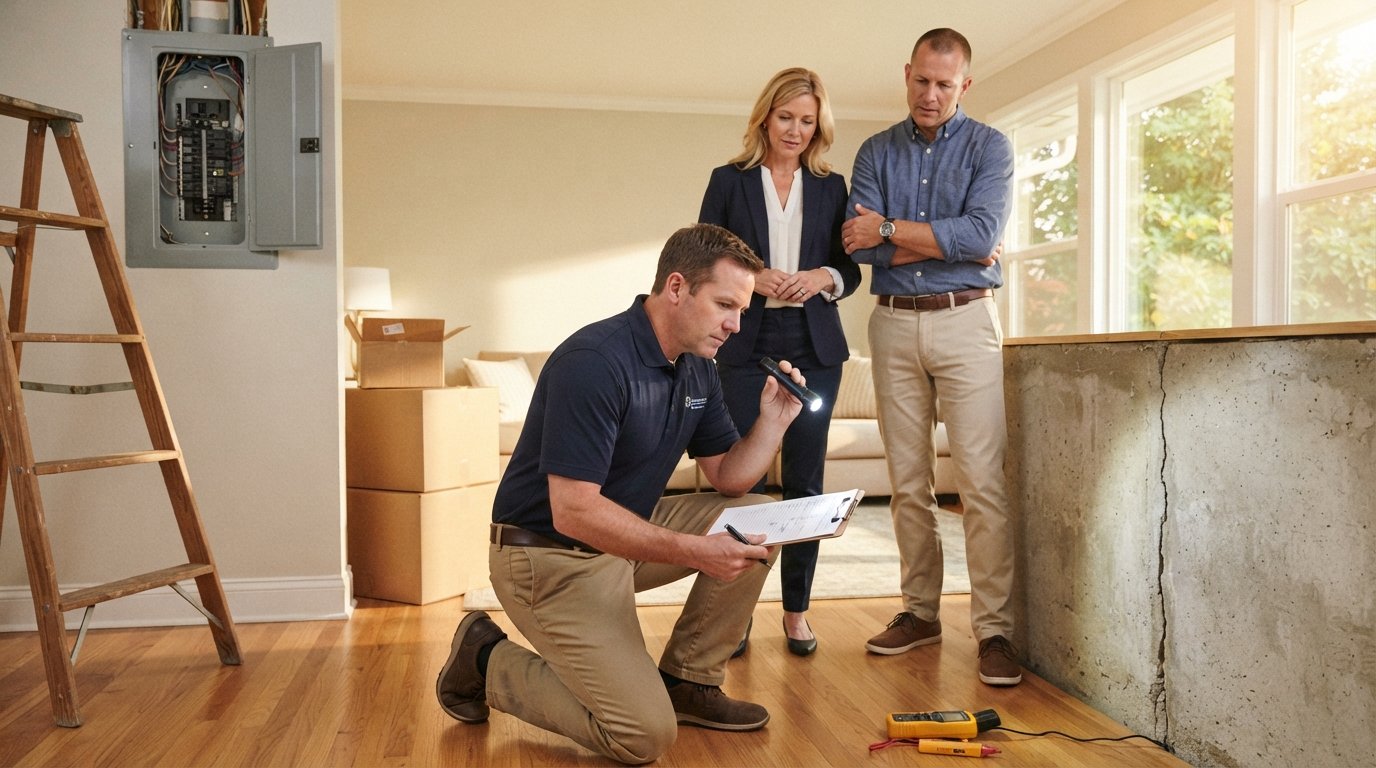
Attend the inspection if you can. Walking through the home with the inspector is the best way to understand how systems work, where shut-off valves are located, and which issues are urgent versus cosmetic. You can ask questions in real time and see the problems for yourself, which makes the written report much easier to interpret.
If you cannot attend, ask whether the inspector offers a video walkthrough or a phone debrief. Many professionals provide these as standard. A fifteen-minute call after the inspection can clarify priorities and help you decide what to request from the seller.
Red Flags That Should Make You Walk Away
Most inspectors are honest professionals, but a few warning signs should prompt you to look elsewhere. Be cautious if an inspector guarantees a "pass" or promises to find problems so you can negotiate a lower price. That suggests bias rather than objectivity. Avoid anyone who pressures you to use their repair services or refers you exclusively to one contractor; that is a conflict of interest.
Also be wary of inspectors who discourage you from attending, deliver reports with no photos or explanations, or refuse to provide proof of insurance. These behaviors suggest a lack of professionalism that could cost you dearly if something goes wrong.
Finally, trust your instincts. If an inspector seems rushed, dismissive, or more interested in selling you add-ons than in evaluating the home, keep looking. There are plenty of qualified professionals who will treat your transaction with the care it deserves.
Choosing a home inspector is one of the few decisions in a real estate transaction where a small investment of time and research pays off enormously. By verifying credentials, reading sample reports, asking the right questions, and attending the inspection, you put yourself in a position to negotiate from strength. The right inspector will not just find problems; they will give you the information you need to make a confident, informed decision about the biggest purchase of your life.