VA Loan Guide: What It Is and How It Works
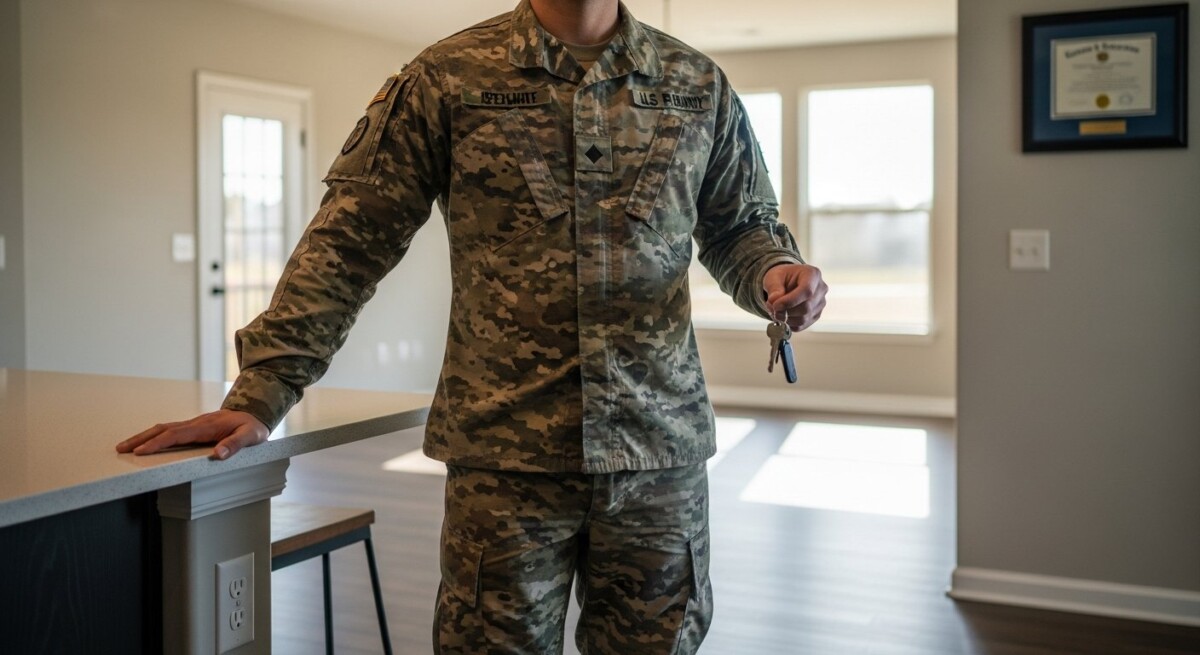

If you are a veteran, active-duty service member, or surviving spouse, you may have heard about a mortgage benefit that requires no down payment and no private mortgage insurance. This benefit is the VA loan, a powerful home financing tool backed by the U.S. Department of Veterans Affairs. Understanding what a VA loan is and how it can help you buy a home is the first step toward using one of the most valuable benefits available to those who have served.
A VA loan is not a direct loan from the government. Instead, it is a guarantee from the Department of Veterans Affairs that protects private lenders (like banks and mortgage companies) from losses if a borrower defaults. This guarantee encourages lenders to offer extremely favorable terms: no down payment, no monthly mortgage insurance, competitive interest rates, and relaxed credit requirements. Since 1944, the VA loan program has helped millions of veterans and service members become homeowners with terms that conventional and even FHA loans cannot match.
What Is a VA Loan Exactly?
A VA loan is a mortgage option specifically designed for eligible military borrowers. It is issued by private lenders but partially guaranteed by the VA. This government backing reduces the lender’s risk, which in turn allows them to offer benefits that are rarely found in other loan types.
The core features of a VA loan include a zero down payment requirement, no need for private mortgage insurance (PMI), limited closing costs, and no prepayment penalties. These features directly address the biggest barriers to homeownership: saving for a large down payment and affording ongoing monthly costs. For many military families who move frequently or have irregular income due to deployments, these advantages make homeownership accessible and sustainable.
Unlike conventional loans, which often require a 5% to 20% down payment, a VA loan lets you finance 100% of the purchase price. And unlike FHA loans, which charge both an upfront mortgage insurance premium and an annual premium for the life of the loan, VA loans have no monthly mortgage insurance. Instead, borrowers pay a one-time funding fee (which can be waived for some veterans with service-connected disabilities).
Who Qualifies for a VA Loan?
Eligibility for a VA loan is determined by the Department of Veterans Affairs based on length and character of service. The main qualifying groups are veterans, active-duty service members, National Guard and Reserve members, and surviving spouses of service members who died in the line of duty or from a service-connected disability.
For veterans and active-duty personnel, you typically need to meet one of these service requirements:
- 90 consecutive days of active service during wartime
- 181 consecutive days of active service during peacetime
- More than 6 years of service in the National Guard or Reserves
Surviving spouses may qualify if they have not remarried (or remarried after age 57 or on or after December 16, 2003). Each case can have unique exceptions, so it is wise to check with the VA or a lender who specializes in VA loans to confirm your eligibility status.
Once you have your Certificate of Eligibility (COE), you can apply for a VA loan with any approved lender. The COE proves to the lender that you meet the VA’s service requirements. You can obtain it online through the VA’s eBenefits portal, by mail, or through your lender (many lenders can pull it electronically in minutes).
Key Benefits of a VA Loan
The advantages of a VA loan extend far beyond the no-down-payment feature. Here are the most impactful benefits that make this program unique:
- No down payment required: You can finance the full purchase price, which means you can buy a home without years of saving for a large lump sum.
- No private mortgage insurance (PMI): Conventional loans with less than 20% down require PMI, which can cost hundreds of dollars per month. VA loans have no such requirement.
- Competitive interest rates: Because the VA guarantees part of the loan, lenders often offer lower rates than comparable conventional or FHA loans.
- Limited closing costs: The VA limits which closing costs a lender can charge, and sellers can pay many of the costs on your behalf.
- No prepayment penalty: You can pay off the loan early without any extra fees, allowing you to save on interest if you sell or refinance.
These benefits translate directly into lower monthly payments and less money needed at closing. For example, on a $300,000 home, a conventional loan with 5% down would require a $15,000 down payment plus monthly PMI of around $150. With a VA loan, your down payment is zero and your monthly payment is lower because you skip PMI entirely. Over the life of the loan, these savings can reach tens of thousands of dollars.
How the VA Funding Fee Works
The VA funding fee is a one-time charge that helps offset the cost of the loan program to taxpayers. It is paid at closing or can be rolled into the loan amount. The fee varies based on your down payment amount, whether it is your first VA loan or a subsequent use, and your military category (regular or reserve/National Guard).
For first-time use with zero down payment, the funding fee is 2.15% of the loan amount for regular military and 2.4% for reserves. If you put 5% down, the fee drops to 1.5%. If you put 10% or more down, it falls further to 1.25%. Subsequent uses carry slightly higher fees. Veterans receiving VA disability compensation are exempt from the funding fee entirely. For a detailed breakdown of these costs and strategies to minimize them, see our guide on the VA loan funding fee and how to save.
While the funding fee is an upfront cost, it is often lower than the combined upfront and monthly costs of PMI on a conventional loan. In many cases, the break-even point arrives within a few years, making the VA loan the more affordable option even when you factor in the fee.
VA Loan Requirements and Process
Qualifying for a VA loan involves meeting the lender’s credit, income, and property standards in addition to the VA’s eligibility rules. Lenders want to see a stable income, a credit score typically above 620 (though some lenders go lower), and enough residual income to cover living expenses after the mortgage payment.
The VA itself does not set a minimum credit score, but most lenders do. A score of 620 or higher is common, and some lenders accept scores as low as 580 with compensating factors. You also need a valid Certificate of Eligibility and must intend to occupy the home as your primary residence (VA loans are not for investment properties or vacation homes).
The property must meet the VA’s minimum property requirements (MPRs), which ensure the home is safe, sanitary, and structurally sound. An appraiser from the VA’s approved list inspects the home and issues a value opinion. The appraisal protects you and the lender from overpaying for a property with hidden defects.
The application process follows these steps:
- Obtain your Certificate of Eligibility (COE) through the VA or your lender.
- Choose a VA-approved lender and get pre-approved (this shows sellers you are a serious buyer).
- Find a home and make an offer. Your real estate agent should be familiar with VA contracts.
- Apply for the loan formally. The lender will order the appraisal and verify your income and assets.
- Close on the home. The VA limits certain closing costs, and the seller can contribute up to 4% of the purchase price toward your costs.
For a step-by-step walkthrough of the entire process from application to closing, read our article on how VA loans work: a clear guide for homebuyers.
Common Misconceptions About VA Loans
Despite their popularity, VA loans are surrounded by myths that can discourage eligible borrowers from using them. One common misconception is that VA loans take longer to close than conventional loans. In reality, the timeline is similar, often 30 to 45 days, as long as the appraisal is ordered quickly and the borrower provides documentation promptly.
Another myth is that sellers dislike VA offers because of the appraisal and property requirements. While it is true that the VA appraisal is thorough, it protects the buyer from purchasing a home with major defects. Many sellers are happy to accept a VA offer because it signals a motivated buyer with guaranteed financing. The key is to work with a real estate agent who knows how to present a VA offer effectively.
Some borrowers also believe they can only use a VA loan once. That is not true. You can use your VA entitlement multiple times, as long as you pay off the previous loan or sell the property. If you still have an active VA loan, you may have enough remaining entitlement for another purchase, especially if you use a VA streamline refinance or a second-tier entitlement.
Comparing VA Loans to Other Loan Types
When you are deciding between a VA loan, an FHA loan, or a conventional loan, the VA option almost always wins for eligible borrowers. The table below highlights the key differences:
- Down payment: VA requires 0%. FHA requires 3.5%. Conventional requires 3% to 20%.
- Monthly mortgage insurance: VA has none. FHA has an annual premium (typically 0.55% to 0.85% of the loan amount) for the life of the loan. Conventional has PMI until you reach 20% equity.
- Credit score minimum: VA typically 620 (some lenders lower). FHA 580 with 3.5% down. Conventional 620 to 660.
- Upfront cost: VA funding fee (2.15% for first-time use with zero down). FHA upfront MIP (1.75%). Conventional no upfront insurance but higher rate if low down payment.
For most veterans, the VA loan results in the lowest total monthly payment and the least cash required at closing. Even if you have a high credit score and can put 20% down on a conventional loan, the VA loan’s rates and lack of PMI often give it an edge.
Using a VA Loan for Refinancing
VA loans are not only for home purchases. You can also use them to refinance an existing mortgage. The two main options are the VA Interest Rate Reduction Refinance Loan (IRRRL, often called a VA streamline refinance) and the VA cash-out refinance.
The IRRRL is designed to lower your interest rate on an existing VA loan with minimal paperwork and no appraisal required in most cases. It can be a fast, low-cost way to reduce your monthly payment. The cash-out refinance allows you to tap into your home equity up to 100% of the home’s value, replacing your current mortgage (VA or non-VA) with a new VA loan. This can be useful for consolidating debt, making home improvements, or covering large expenses.
If you are considering refinancing, the VA loan remains one of the most flexible and affordable options because of the streamlined process and competitive rates.
Understanding what a VA loan is and how it works can open the door to homeownership with terms that honor your service. Whether you are buying your first home, moving to a new duty station, or refinancing an existing mortgage, the VA loan program offers benefits that can save you thousands of dollars and make the entire process smoother. Speak with a VA-approved lender to check your eligibility, compare offers, and take the next step toward your homeownership goals.


About Landon Hayes
Recent Posts



Find The Best Rates